Sandalwood
Santalum
austrocaledonicum.
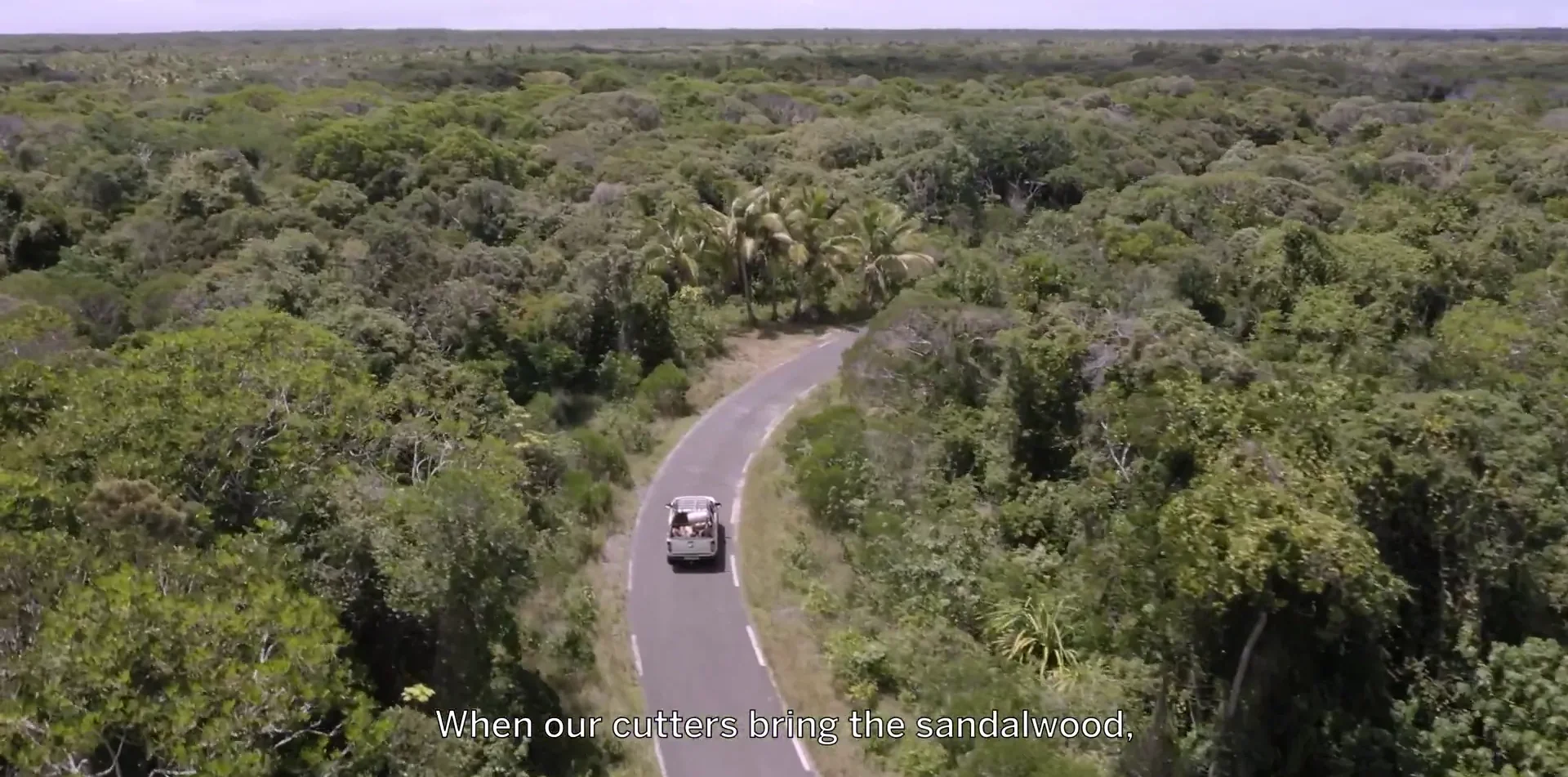
Endemic to New Caledonia and Vanuatu, Caledonian sandalwood is a hemiparasitic species of the dry forest.
Terroir
Coral soil,
a dry season,
a custom.
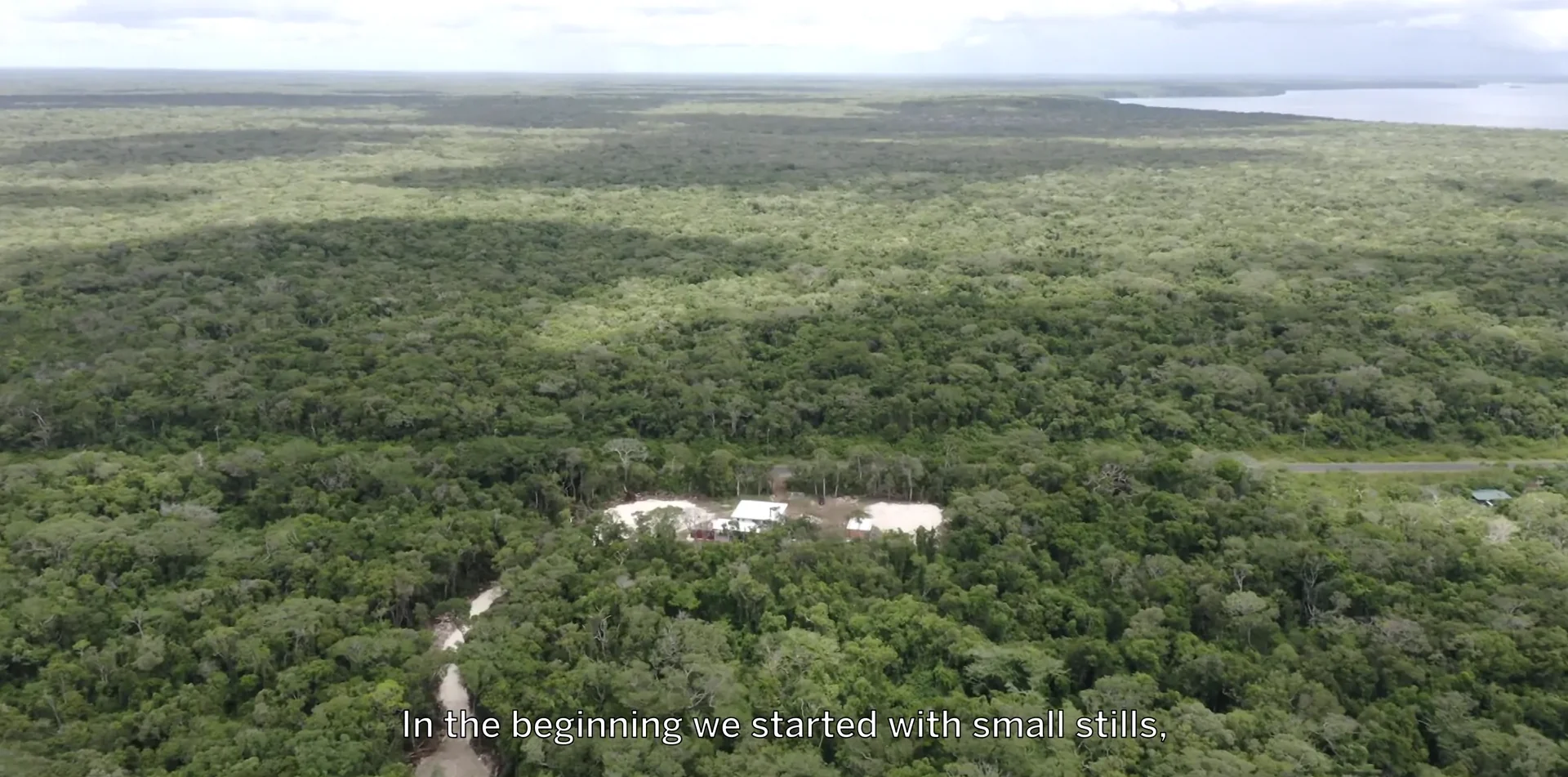
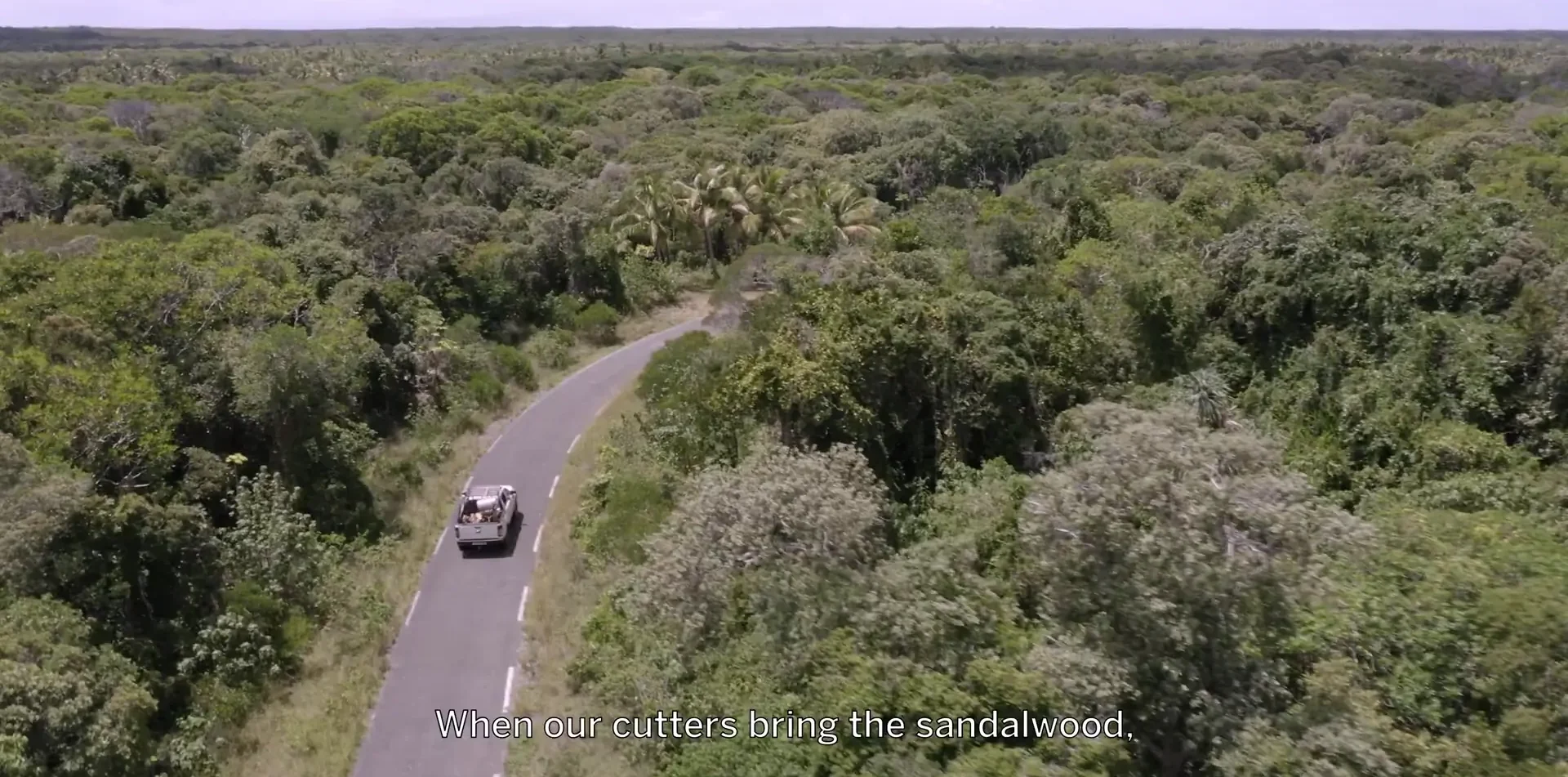
Lifou and the Loyalty Islands harbour one of the last sustainably managed wild sandalwood populations. The coral soil, dry climate in the cool season, and customary forest management practices shape a distinct chemical profile — drier and more mineral than Indian sandalwoods.

Olfactive profile
A dry wood, an amber persistence.
Top notes
Faint — sandalwood is a base note by nature. Occasionally a fleeting green almond, a stroke of white pepper.
Heart notes
A dry, amber wood, faintly creamy. More mineral than Mysore sandalwoods, more structured than Australian sandalwoods.
Base notes
Deep, persistent, lightly milky. Exceptional skin tenacity (12-24 hours depending on the carrier).
Comparison
The world's
sandalwoods.
Each origin tells a different olfactive story. Our Caledonian sandalwood stands out for its mineral dryness, its persistence on skin, and its sustainable provenance — the only one under CITES-free wild stewardship in the Pacific.
| Origin | Profile | Availability | CITES |
|---|---|---|---|
| Mysore (S. album) | Lactic, sweet, opulent | Very restricted | Annex II |
| Australia (S. spicatum) | Dry, slightly resinous | Available, tense | — |
| Vanuatu (S. austrocaledonicum) | Dry, amber, NC-like | Restricted | — |
| New Caledonia (S. austrocaledonicum) | Dry, mineral, persistent | Province quota | — |
Applications
From perfumery to
meditation.
Fine perfumery
Base note, modern woody accord, complement to oud and leather.
Luxury cosmetics
Signature ingredient for eco-luxe ranges — anti-age and mature skincare.
Premium aromatherapy
Meditative practices, relaxation, sleep — pure dilution in jojoba.